The Uneasy Coexistence We Can No Longer Ignore
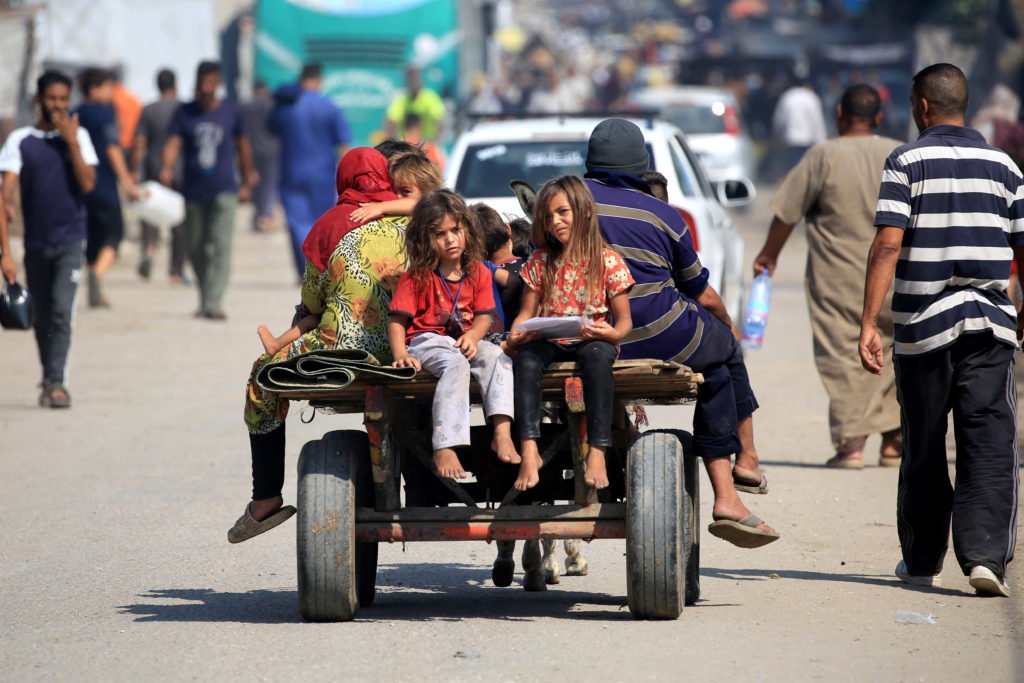
At almost any moment today, millions of people across the world are living under conditions that would be considered unthinkable elsewhere—constant fear, displacement, hunger, loss of family, and the daily uncertainty of survival. Ongoing conflicts in places such as Sudan, Palestine, Ukraine, Yemen, Syria, Myanmar, and parts of the Democratic Republic of the Congo are not abstract geopolitical developments. They are lived realities for ordinary people whose lives have been violently disrupted.
And yet, alongside this, there exists another uninterrupted stream of human activity—celebrations, vacations, promotions, weddings, parties, fitness milestones, sunsets. A brief scroll through any social media feed presents a world that appears cheerful, stable, and almost untouched by the suffering unfolding elsewhere. Interwoven with this is a constant layer of corporate self-projection: announcements of fund-raising rounds, product launches, strategy offsites, keynote appearances, leadership panels, and carefully staged moments of organizational momentum. Much of this communication is less about shared learning or genuine contribution, and more about asserting presence—signaling relevance, success, and the visibility of institutions and their leaders. It’s all about me and money. Together, personal celebration and corporate amplification create a dense stream of curated normalcy, one that reinforces the impression of continuity even as large parts of the world remain trapped in crisis.
Progress, Promises, and Confident Narratives
Increasingly, this stream is also infused with confident declarations about technological progress. Stablecoins are framed as inevitable financial liberation. Artificial intelligence is presented as an engine of unprecedented productivity, creativity, and efficiency. New platforms, protocols, and models are repeatedly described as forces that will democratize access, remove friction, empower individuals, and make the world measurably better.
At the same time, depending on who is speaking, these very technologies are also portrayed as existential risks—tools that will destabilize labor markets, concentrate power, erode privacy, or accelerate inequality beyond repair. Optimism and alarm coexist with equal certainty.
What is striking is not the promise or the peril of these technologies themselves, but the confidence with which both narratives are delivered. For large parts of the world, the language of disruption, transformation, and exponential progress sits uncomfortably beside more immediate concerns—safety, food, shelter, dignity, and survival. Progress is real, but it is uneven. And its benefits are not experienced simultaneously, or equally.
This Is Not New—But Our Exposure Is
Human history offers no shortage of suffering existing alongside ordinary life. Wars have always been fought while people elsewhere married, worked, laughed, and raised children. There has never been a moment when the entire world suffered equally or at the same time.
What is new is exposure. Digital technology has collapsed distance. Conflicts that once unfolded beyond the horizon now arrive instantly on personal devices, often without context, warning, or resolution. The same screen that shows images of destroyed neighborhoods can show birthday celebrations minutes later.
This compression of realities is unprecedented. We are no longer shielded by geography or time. We are aware, but not necessarily involved. That difference matters.
The Psychological Limits of Empathy
Human empathy evolved in small social groups, not for a permanently connected world of billions. Continuous exposure to large-scale suffering—especially when one lacks the ability to meaningfully intervene—can overwhelm emotional capacity.
Psychological research has long documented phenomena such as compassion fatigue and emotional numbing. When suffering is constant and unresolved, the mind often resorts to distancing mechanisms. This is not necessarily indifference or moral failure. It is often a form of psychological self-preservation.
In this context, maintaining ordinary routines and sharing moments of joy can serve as an anchor. Normalcy becomes a way to preserve coherence in a world that increasingly feels unstable and unmanageable.
Social Media and the Illusion of Moral Clarity
It is tempting to interpret the abundance of celebratory content as evidence that people do not care. But social media is not a neutral reflection of human values. It is a selective environment shaped by algorithms, incentives, and learned behavior.
Platforms reward positivity over complexity, aesthetics over nuance, and engagement over reflection. Grief, moral uncertainty, and unresolved tension do not travel far. Over time, users internalize these dynamics, often unconsciously.
What appears as indifference may instead be adaptation—an adjustment to systems that are poorly designed for moral depth and sustained attention.
Privilege, Distance, and Uneven Attention
There is also an uncomfortable reality that must be acknowledged: for those not directly affected by conflict, daily life does continue. Access to safety, infrastructure, and political stability allows some societies to function with relative continuity even as others collapse.
This is not primarily an individual choice; it is a structural condition. Privilege is often invisible to those living within it precisely because it feels ordinary.
The moral tension arises when awareness of suffering coexists with personal safety. Guilt, helplessness, or defensiveness often follow. Many resolve this tension through compartmentalization—holding global tragedy and personal life in separate mental spaces in order to function.
Awareness Without Agency
Perhaps the most destabilizing feature of modern global consciousness is the imbalance between knowledge and agency. We can witness bombings, displacement, civilian deaths, and humanitarian collapse in real time. Yet for most individuals, the capacity to meaningfully alter these outcomes is extremely limited.
Awareness without agency is psychologically corrosive. It creates a sense of responsibility without power. Over time, this imbalance can lead to performative gestures, selective outrage, or emotional withdrawal. None of these responses feel sufficient. All are understandable.
A Call for Measured Presence
The world today is deeply and unevenly unfair. Many people live under conditions of fear and deprivation that are far removed from our own daily realities. While their struggles may not be directly connected to us, they unfold in the same time we share.
This does not require silence, withdrawal, or the rejection of joy. It calls instead for awareness and restraint—especially in public expression. Celebration does not need to disappear, but it benefits from context. Advocacy does not need to cease, but it benefits from balance.
The world is complex and rarely reducible to simple moral binaries. When we rush to amplify one event, one narrative, or one group’s suffering, we should do so with an awareness of the broader landscape of pain in which it exists. Balance does not mean neutrality in the face of injustice. It means resisting the idea that visibility, convenience, majority opinion, or media coverage alone determine whose suffering matters.
Media attention measures reach, not moral weight. Human worth does not scale with attention. Every life carries equal significance, regardless of geography, politics, or prominence.
Holding Two Truths at Once
It is possible, and necessary, to hold two truths simultaneously: that life for many is unimaginably cruel and unjust, and that life for others continues with moments of beauty, love, and celebration.
Refusing to acknowledge either truth distorts reality. The task before us is not to eliminate joy, nor to normalize suffering, but to resist indifference—to remain capable of concern even when solutions are not immediately available.
In a world that forces us to witness everything, perhaps the most human response is not certainty or outrage, but careful, sustained awareness, paired with humility about what we can and cannot change. That, at the very least, would be a form of honesty.
Leave a Reply